
Language is a living system that evolves through usage, context, and culture. In Portuguese, many expressions carry subtle meanings that can completely change how a sentence is understood. One such expression is “dado à.” Though it may appear simple at first glance, dado à plays an important grammatical and semantic role in both written and spoken Portuguese.
This article explores the meaning of dado à, its grammatical structure, correct usage, common mistakes, and examples in real contexts. Whether you are a student, writer, translator, or language enthusiast, understanding dado à will help you communicate more clearly and naturally in Portuguese.
What Does “Dado à” Mean?
The expression dado à can be translated into English as:
- “given to”
- “prone to”
- “inclined to”
- “due to” (depending on context)
Its meaning changes slightly based on how it is used in a sentence, but it generally indicates a tendency, cause, or natural inclination toward something.
Simple Example:
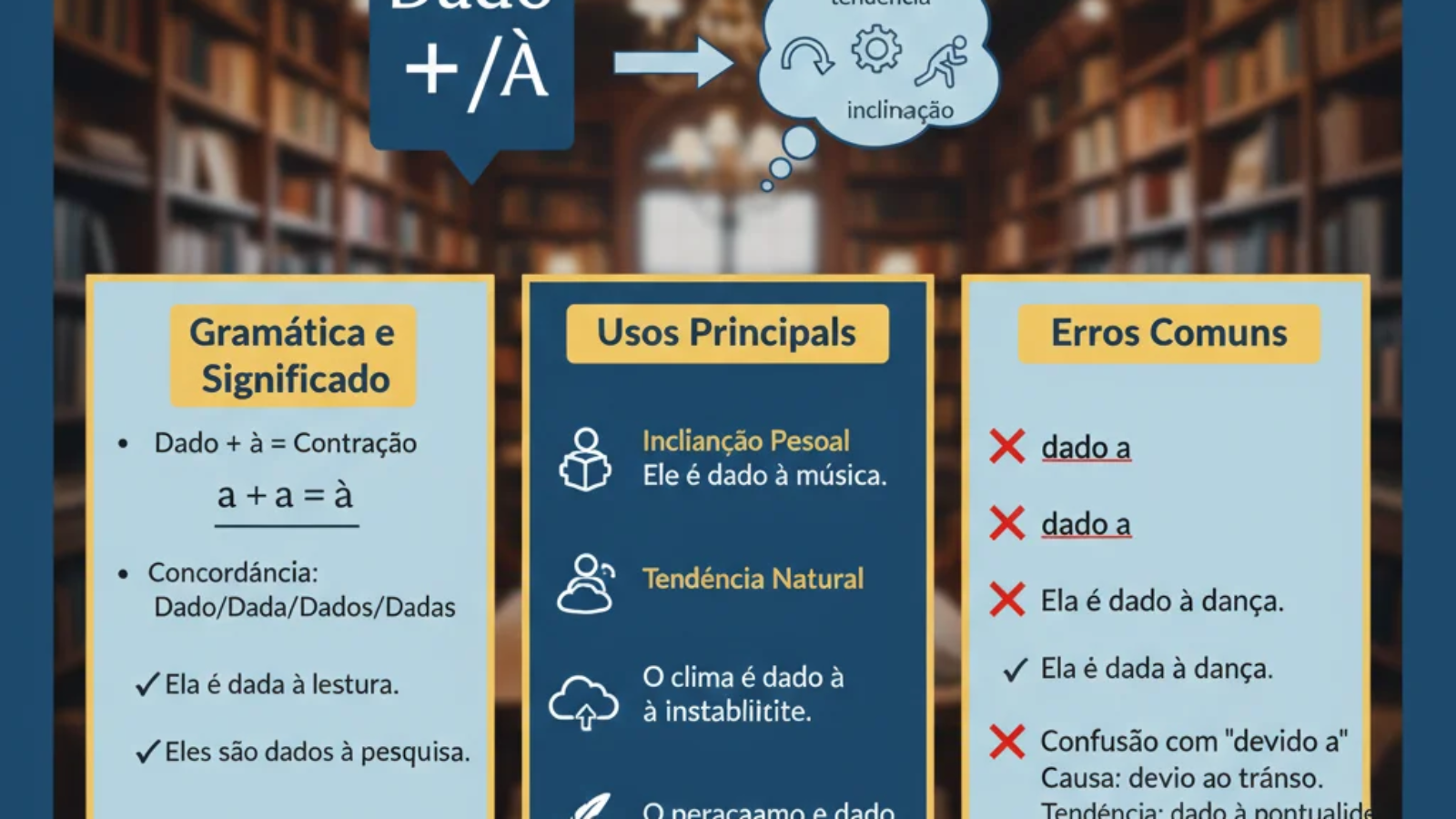
Ele é dado à música.
(He is inclined toward music.)
Here, dado à expresses a natural tendency or preference.
Grammatical Structure of “Dado à”
To understand dado à, it helps to break it down:
- Dado → past participle of the verb dar (to give)
- À → contraction of a + a (preposition + feminine article)
Together, dado à agrees in gender and number with the subject it describes.
Gender Agreement Examples:
- Ele é dado à leitura. (masculine)
- Ela é dada à leitura. (feminine)
Plural Form:
- Eles são dados à pesquisa.
- Elas são dadas à arte.
Grammatical agreement is essential for correct usage and fluency.
When to Use “Dado à”
1. To Express Personal Inclination
One of the most common uses of dado à is to describe a person’s habits, tendencies, or interests.
Examples:
- Ela é dada à escrita criativa.
- Ele é dado à reflexão profunda.
- O artista é dado à experimentação.
In these cases, dado à suggests a natural or habitual inclination rather than a forced action.
2. To Indicate a Natural Tendency
The expression can also describe tendencies of situations, behaviors, or abstract concepts.
Examples:
- A mente humana é dada à curiosidade.
- O clima da região é dado à instabilidade.
- O projeto é dado à inovação.
This usage is common in academic and descriptive writing.
3. Formal and Literary Contexts
Dado à is frequently found in formal writing, literature, essays, and academic texts. It adds a refined and expressive tone compared to simpler alternatives.
Example:
O personagem principal é dado à melancolia, refletindo os conflitos internos da narrativa.
Because of this, it is widely used by writers who want to convey depth and sophistication.
Common Mistakes with “Dado à”
Even native speakers sometimes misuse dado à. Here are some frequent errors to avoid:
1. Incorrect Accent Usage
❌ dado a
✅ dado à
The grave accent (à) is mandatory because it indicates the contraction of two vowels.
2. Lack of Agreement
❌ Ela é dado à dança.
✅ Ela é dada à dança.
Always match dado/dada/dados/dadas with the subject.
3. Confusing with “devido a”
Although dado à and devido a can sometimes appear similar, they are not always interchangeable.
- Dado à → inclination or tendency
- Devido a → cause or reason
Example:
- O atraso foi devido ao trânsito. (cause)
- Ele é dado à pontualidade. (tendency)
Dado à vs Similar Expressions
Understanding similar expressions helps avoid confusion.
Dado à vs Inclinado a
Both express tendency, but dado à is more formal and descriptive.
Dado à vs Propenso a
“Propenso a” often suggests probability, while dado à implies habit or nature.
Dado à vs Acostumado a
“Acostumado a” indicates habit formed over time, while dado à suggests innate inclination.
Why “Dado à” Is Important in Writing
Using dado à correctly improves:
- Clarity of expression
- Natural flow of Portuguese sentences
- Stylistic sophistication
- Professional and academic credibility
Writers, journalists, and students benefit from mastering such expressions to avoid repetitive language and improve textual richness.
Examples of “Dado à” in Sentences
Here are more natural examples to reinforce understanding:
- O jovem é dado à tecnologia desde cedo.
- A escritora é dada à introspecção.
- Eles são dados à pesquisa científica.
- A sociedade moderna é dada à velocidade e ao consumo.
- A criança é dada à imaginação.
Each sentence reflects inclination, habit, or tendency.
How to Practice Using “Dado à”
To master dado à, try the following:
- Read formal Portuguese texts
- Write short sentences daily using dado à
- Check agreement carefully
- Listen to native speakers in interviews or lectures
- Compare with similar expressions
Practice builds confidence and accuracy.
FAQs About “Dado à”
1. What does “dado à” mean in simple terms?
“Dado à” means someone or something is naturally inclined, prone, or given to a certain behavior or characteristic.
2. Is “dado à” formal or informal?
It is mostly formal or neutral, commonly used in literature, academic writing, and professional communication.
3. Does “dado à” always need an accent?
Yes. The accent in à is required because it represents a grammatical contraction.
4. Can “dado à” be used for objects or ideas?
Yes. It can describe people, objects, situations, and abstract concepts.
Example:
O projeto é dado à inovação.
5. Is “dado à” the same as “devido a”?
No. “Dado à” expresses inclination, while “devido a” expresses cause.
6. How do I know whether to use dado, dada, dados, or dadas?
Match it with the gender and number of the subject in the sentence.
7. Is “dado à” common in spoken Portuguese?
It is more common in written and formal speech, but it is still understood in everyday conversation.
8. Can beginners use “dado à”?
Yes, but they should practice agreement and accent usage carefully.
Conclusion
The expression dado à is a powerful and elegant part of the Portuguese language. It allows speakers and writers to express natural tendencies, inclinations, and characteristics with precision and style. While it may require attention to grammar and accents, mastering dado à significantly enhances language proficiency.
By understanding its structure, meaning, and proper usage, you can confidently incorporate dado à into your writing and speech—making your Portuguese more fluent, expressive, and authentic.

Add a Comment