
Introduction
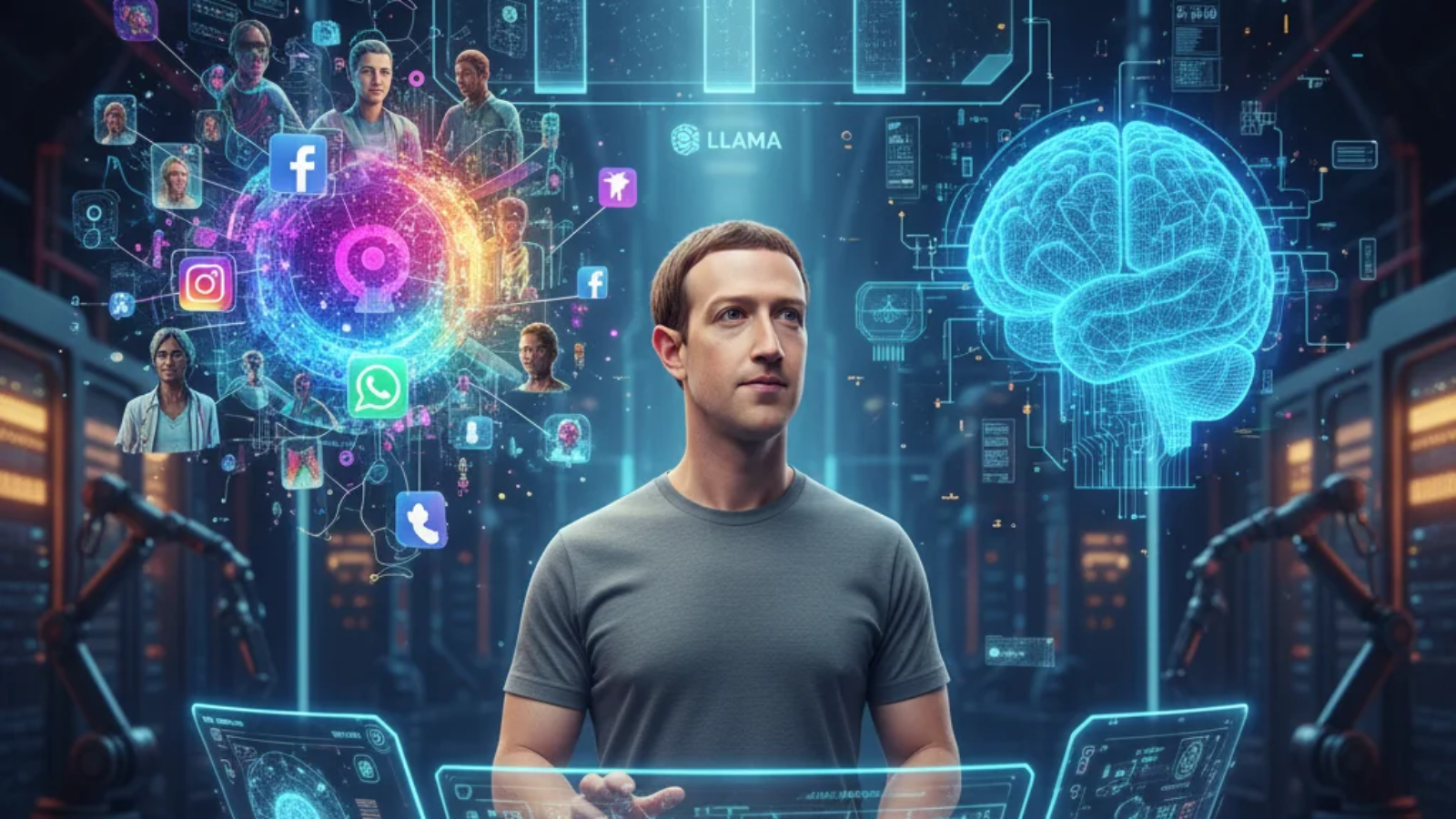
Artificial intelligence has become the driving force behind global innovation, shaping industries from healthcare to communication. Among the tech leaders defining this revolution, Mark Zuckerberg stands out with his bold and transformative approach. His AI vision focuses on building smarter, safer, and more integrated systems that connect people and technology like never before. As we explore the Mark Zuckerberg AI vision, it becomes clear that his plans go far beyond social media—they aim to redefine how humans interact with machines.
Understanding Mark Zuckerberg’s Approach to AI
When most people hear “Zuckerberg,” they think of Facebook. However, the company’s transformation into Meta Platforms Inc. marked a turning point in his strategy. The Mark Zuckerberg AI vision is not just about social networking; it’s about creating an intelligent digital ecosystem. Zuckerberg has repeatedly emphasized that artificial intelligence will power the next generation of tools in communication, business, and creativity.
AI already plays a major role in Meta’s ecosystem—enhancing ad recommendations, detecting harmful content, and improving user experience across Facebook, Instagram, and Threads. But the long-term vision is much broader. Meta is investing billions into large language models, generative AI, and virtual world intelligence—building foundations for a smarter metaverse.
Key Pillars of the Mark Zuckerberg AI Vision
1. Open Source AI Models
One of the most defining elements of Mark Zuckerberg’s AI vision is his commitment to open-source development. In 2023 and 2024, Meta launched its LLaMA series (Large Language Model Meta AI), a direct competitor to models like GPT. Unlike most companies that keep their AI models closed, Zuckerberg’s approach encourages collaboration.
He believes that open-source AI democratizes innovation, allowing researchers and developers worldwide to contribute to safe, transparent, and efficient systems. This approach has won Meta strong support among the developer community and has pushed forward global AI experimentation.
2. AI-Powered Metaverse
Zuckerberg’s metaverse dream would be impossible without artificial intelligence. AI powers avatars, speech recognition, object creation, and real-time interactions within virtual spaces. His AI vision aims to make these virtual environments intelligent enough to understand and react to users naturally.
Imagine an AI assistant that can design your digital workspace, generate virtual tools, or communicate with others on your behalf—all powered by contextual understanding. For Zuckerberg, AI isn’t just a component of the metaverse—it’s the brain that makes the system alive.
3. Generative AI for Everyday Users
In 2025, Meta began integrating generative AI into its mainstream products. Through features like Meta AI Chat, image generation, and smart assistants across Facebook and Instagram, Zuckerberg’s goal is to make creative AI tools accessible to billions.
Users can now create custom stickers, generate AI art, or summarize long texts directly in Meta’s platforms. The Mark Zuckerberg AI vision here is to empower creativity for everyone—not just developers. It’s about turning every smartphone user into a creator.
4. Responsible and Ethical AI
No great technology can thrive without trust. Zuckerberg acknowledges this, emphasizing responsible development as a foundation of his AI mission. Meta has launched dedicated AI oversight teams, transparency reports, and partnerships with researchers to study AI safety and bias.
The Mark Zuckerberg AI vision promotes building systems that align with human values, protect user privacy, and reduce misinformation. By maintaining transparency, Meta aims to restore public trust and ensure AI helps humanity rather than harms it.
Challenges Facing Zuckerberg’s AI Vision
While Zuckerberg’s ambitions are bold, the path isn’t without obstacles. Meta faces fierce competition from Google, OpenAI, and Apple—all advancing rapidly in the AI space. Additionally, data privacy concerns and misinformation issues have long haunted Meta’s reputation.
Balancing innovation with responsibility is the biggest challenge. As the company integrates AI deeper into its ecosystem, it must ensure algorithms don’t unintentionally spread harmful or biased content. Zuckerberg’s open-source stance, while applauded, also raises questions about misuse of AI models in malicious hands.
Still, these challenges have not slowed progress. Meta continues to expand its AI infrastructure, building supercomputers capable of training trillion-parameter models—among the largest ever built.
Real-World Impact of Mark Zuckerberg’s AI Vision
Zuckerberg’s AI roadmap is already transforming digital communication. From content moderation and translation to accessibility tools for disabled users, AI is at the heart of every new Meta feature. Businesses use Meta’s AI for smarter advertising and audience targeting, while creators leverage AI tools for enhanced storytelling and design.
Beyond commercial use, Meta’s AI research contributes to global understanding of natural language processing, reinforcement learning, and multimodal systems. The Mark Zuckerberg AI vision therefore extends beyond profit—it aims to shape a collaborative future for human and machine intelligence.
The Future of Zuckerberg’s AI Ambitions
Looking ahead, the next decade could see Meta evolve into a full-fledged AI-driven company. Zuckerberg envisions digital assistants integrated seamlessly across devices, capable of reasoning, planning, and emotional understanding.
He has hinted that Meta will develop personal AI companions trained on individual preferences—similar to a digital “second self.” Combined with virtual and augmented reality, this could redefine the way people work, learn, and socialize.
By 2030, the Mark Zuckerberg AI vision may transform Meta into the world’s largest AI ecosystem, connecting billions through personalized digital experiences.
Conclusion
The Mark Zuckerberg AI vision is not just a business plan—it’s a glimpse into the next era of human-technology interaction. Through open innovation, responsible design, and massive AI integration, Zuckerberg aims to merge the physical and digital worlds in ways previously unimaginable.
As AI continues to evolve, one thing is clear: Mark Zuckerberg’s vision is reshaping how the world connects, creates, and communicates. His ambition may redefine not just Meta, but the entire digital landscape—pushing humanity closer to a truly intelligent future.
FAQs
Q1. What is the main goal of Mark Zuckerberg’s AI vision?
To make artificial intelligence accessible, ethical, and integrated into everyday digital life—especially through Meta’s platforms.
Q2. What role does AI play in the metaverse?
AI creates realistic avatars, intelligent environments, and automated digital assistants, forming the foundation of immersive virtual worlds.
Q3. Is Zuckerberg’s AI open source?
Yes, Meta’s LLaMA models are open source, allowing global developers to collaborate and improve AI technology freely.
Q4. What challenges does Meta face in AI development?
Privacy concerns, misinformation, and ethical risks remain the top issues as Meta pushes its AI technologies forward.
Q5. How will Zuckerberg’s AI vision shape the future?
It will expand creativity, enhance digital communication, and bring human-AI collaboration into mainstream life.

Add a Comment