
Weeds are those little green plants that suddenly appear everywhere in your garden. No matter how hard you try, they seem to grow overnight. I’ve always had a strange respect for them they are very persistent. But don’t worry! With some simple steps, you can learn how to get rid of weeds and keep your garden healthy. Here’s a practical guide that mixes hands-on tips with eco-friendly ideas.
Understanding Weeds and How to Get Rid of Them
Weeds grow quickly in empty spaces and take water and nutrients from your plants. The most important rule? Remove them before they make seeds. If you wait too long, one weed can turn into hundreds. Knowing how to get rid of weeds starts with understanding why they thrive.
Preventing Weeds Before They Grow
The best way to control weeds is to prevent them from growing:
- Plant close together: If plants grow close, weeds have less space to grow. I planted marigolds close together once, and hardly any weeds appeared.
- Check soil and new plants: Make sure new plants or soil don’t have tiny weed seeds. One little seed can start a big problem.
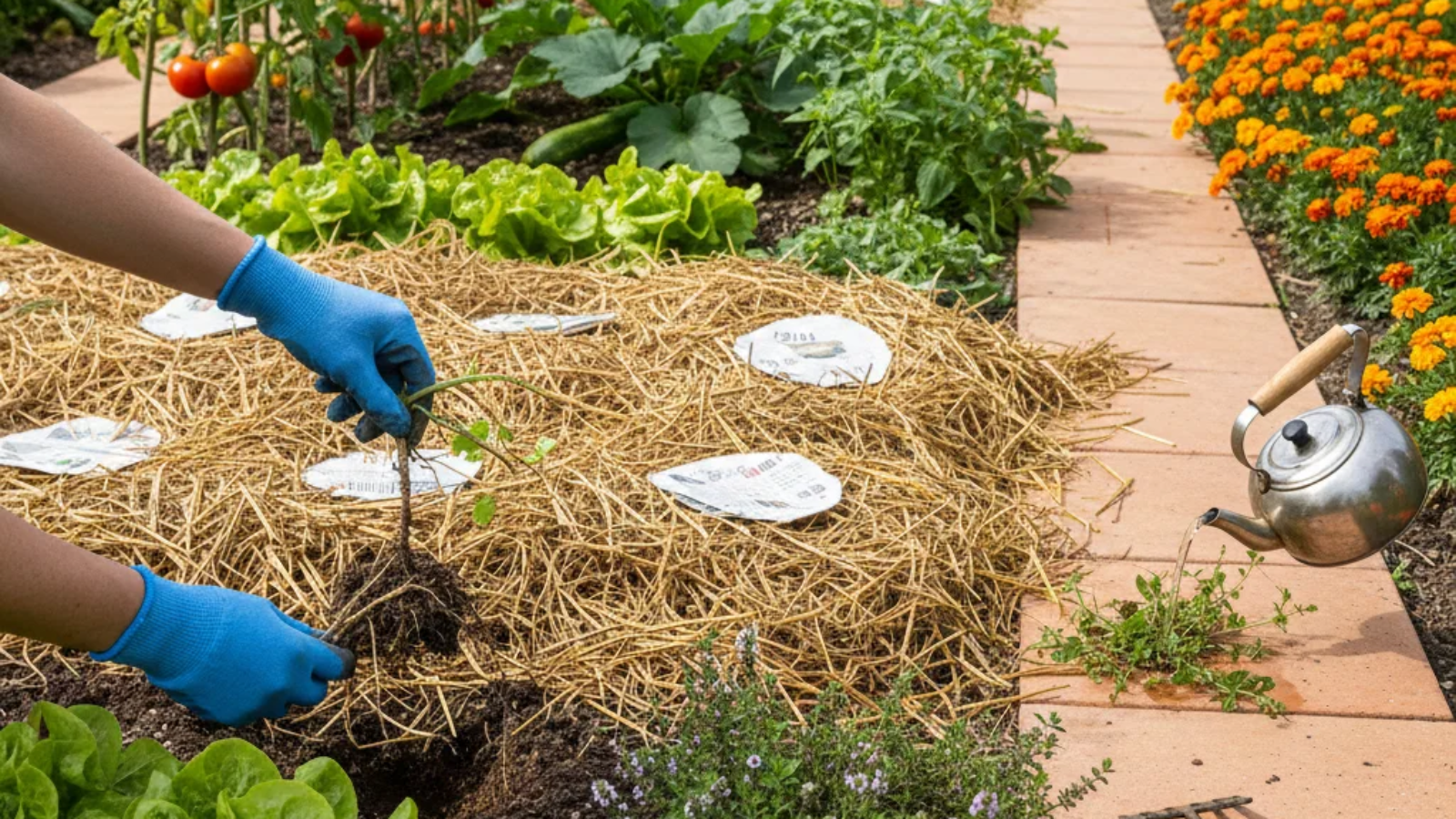
- Use mulch: Organic mulch like straw or sugarcane keeps weeds from growing and keeps the soil moist. Laying newspaper or cardboard under the mulch also helps. Prevention is one of the easiest ways to learn how to get rid of weeds.
How to Get Rid of Weeds in Garden Beds
If weeds grow in your flower beds, here’s what to do:
- Pull by hand: Grab the weed at the bottom and pull out the roots. Gloves are a must! Hand-weeding is one of the safest ways to get rid of weeds without harming plants.
- Use tools: Hand weeders or daisy-grubbers help remove tough roots. I once pulled a thistle with a daisy-grubber—it came out in one try!
- Mulch & living mulch: Plant low-growing herbs like thyme or chamomile to cover the soil and stop weeds.
- Creative idea: Plant mint along paths. It spreads quickly, but it stops weeds and smells great.
How to Get Rid of Weeds in the Lawn
Lawns need care because some methods can hurt the grass:
- Feed your lawn: A healthy lawn naturally stops weeds from growing.
- Use tools: Long-handled weeders save your back and knees.
- Selective herbicides: Only use them if necessary, and follow instructions carefully.
- Work in small areas: One summer I tried doing the whole lawn at once—it was tiring! Doing small sections works better. Following these steps helps you understand how to get rid of weeds effectively in lawns.
How to Get Rid of Weeds in Paths, Driveways, and Pavers
These areas are easy to treat:
- Boiling water: Pour on weeds to kill them instantly. Be careful not to splash your plants or yourself!
- Vinegar: A natural weed killer. Apply only on weeds on dry days.
- Baking soda: Sprinkle in cracks to stop weeds from growing. Works well on small spots.
- Tools: Daisy-grubbers or hoes help remove deep-rooted weeds. Knowing how to get rid of weeds in hard surfaces is simple with these methods.
How to Get Rid of Weeds in Vegetable Patches
For vegetables, never use chemicals:
- Hand-weeding: Pull weeds carefully, including the roots.
- Mulching: Lay newspaper and 5–7 cm of straw or sugarcane mulch. This stops weeds and helps the soil.
- Boiling water for paths: Keeps areas around your vegetables clean. These natural methods teach you safe ways to get rid of weeds around edible plants.
Natural vs Chemical Methods How to Get Rid of Weeds
Sometimes weeds are tough:
- Try natural methods first: Hand-weeding, mulch, vinegar, or boiling water are safe and effective.
- Selective chemicals: Only if really needed, and protect your plants.
- Balance is key: You don’t need chemicals everywhere. Small, regular efforts work best. This approach helps you understand how to get rid of weeds in different areas of your garden.
Long Term Maintenance for Weed-Free Gardens
Weeds are persistent, so keep checking your garden:
- Pull new weeds quickly.
- Lay mulch after rain to stop weeds from sprouting.
- Work a little every day or week instead of letting weeds take over.
- Early spring and after rain are the best times for preventive work. Following these habits shows the best way to get rid of weeds permanently.
Ask for Professional Help
If your garden is large or weeds are too much, professional help can save time. Companies like Jim’s Mowing use eco-friendly methods to control weeds safely and keep your garden looking great. They can also teach you new ways to get rid of weeds quickly and naturally.
Conclusion
Weeds may be smart, but gardeners are smarter. By preventing weeds, pulling them out, using mulch, and being consistent, you can enjoy a healthy, beautiful garden. A little patience and care go a long way and adding herbs like thyme or mint makes your garden smell amazing too!
Frequently Asked Questions (FAQs)
1. How to get rid of weeds quickly?
- Pull weeds by hand or use a daisy-grubber for deep roots. Boiling water or vinegar works fast on paths and cracks.
2. How to get rid of weeds naturally?
- Use hand-weeding, mulching, vinegar, boiling water, or living mulch plants. Safe and chemical-free.
3. How to get rid of weeds in the garden?
- Pull by hand, use tools for stubborn roots, mulch heavily, and plant densely to prevent weeds.
4. How to get rid of weeds in the lawn?
- Keep your lawn healthy. Use a long-handled weeder for tough weeds or selective lawn-safe herbicides if needed.
5. How to get rid of weeds in the garden without killing plants?
- Hand-weeding is safest. Mulching or using vinegar carefully on weeds also works without harming plants.
6. How to get rid of weeds in paving?
- Pour boiling water or vinegar directly on weeds. Baking soda in cracks helps prevent regrowth.
7. What kills weeds down to the root overnight?
- Boiling water kills small weeds instantly. For larger weeds, hand-weeding with roots intact works best. Vinegar may take a day or two.
8. How to get rid of weeds permanently?
- Remove weeds before they seed, mulch, plant densely, maintain a healthy lawn, and check your garden regularly. Over time, weeds will stay under control.

Add a Comment